


Displaying items by tag: Bangalore Models
Why you should rent a studio
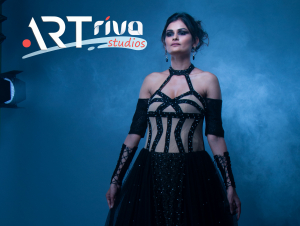
Organising and executing your own studio session is affordable!
It is one of the best ways to take your photographic skills to the next level.
The primary advantage of shooting in a studio is the ability to control and shape the quality of light. Outdoors, you work with whatever the sun and the weather give you that hour. In a studio, every ray of light exists because you decided it should — its direction, its softness, its intensity, its colour. Photography is, quite literally, drawing with light; a studio is the one place where you hold the entire pencil.
And here's the part that surprises most people: studio lighting is the great equaliser of camera gear. Under controlled studio light, even entry-level and cropped-sensor cameras render sharp, clean, well-detailed images. Why? Because studio flash removes the two things that force cameras to struggle — low light and movement. With ample flash power you shoot at your camera's base ISO (its cleanest setting), and the flash burst itself is so brief that it freezes motion far better than a fast shutter alone. The technical gap between a beginner's camera and a flagship narrows dramatically the moment both are under the same strobes. What remains is the photographer's eye — which is exactly the skill worth building.
All of this control traditionally meant owning a large space and a serious pile of equipment — a hefty price to buy, and a running cost to maintain. Renting removes that barrier entirely: full studio capability, paid for only on the days you actually use it.
Whether that matters to you depends on who you are — so let's take this by skill level, and then talk to the people on the other side of the camera too.
If You're Just Starting Out: The Fastest Classroom in Photography
A single well-planned studio session will teach you more about light than months of shooting outdoors. That's not an exaggeration — it's about how learning works.
Outdoors, the light changes every few minutes: a cloud moves, the sun drops, you change position. You can never be sure whether a photo improved because of what you did or what the sky did. In a studio, everything holds still except the one thing you change. Move the light closer — see exactly what happens. Add a softbox — see exactly what changes. One variable at a time, instant feedback on a tethered screen or camera back. That tight feedback loop is precisely how skills form, and it's why photographers who spend even a handful of sessions in a studio suddenly start "seeing" light everywhere — including outdoors.
The rental model fits beginners perfectly: you get access to lighting worth several lakhs without buying anything, and you find out what kind of equipment you actually like before spending on your own. Think of early studio rentals as trying on gear as much as making photos.
One tip from years of watching first-timers: look for studios run by photographers who also teach. An assistant who can show you why a light is placed where it is turns a rental hour into a masterclass. (It's something we deliberately offer — an assistant is included with our studio rentals to get you productive in the shortest possible time, and there's no faster way to learn than setting up alongside someone who does this daily.)
If You're Building Skills and a Portfolio: Rent to Grow
You've done a few sessions, you know your way around a softbox, and now you want portfolio work — headshots, portraits, small fashion tests, product experiments. This is the stage where studio rental earns its keep in a different way: consistency and repeatability.
A portfolio shot outdoors is hostage to weather and daylight hours. Studio work can be scheduled any day, any time, and — crucially — reproduced. Nail a lighting setup you love? Write it down, and it's yours forever, identical on every future shoot. Clients and agencies notice this consistency in a portfolio; it reads as professionalism long before anyone asks about your gear.
This is also the stage for testing before investing. Thinking of buying strobes? Rent a studio that runs the brand you're eyeing and put it through a real shoot. A few hundred rupees of rental time has saved many photographers from lakhs of buyer's remorse. Studios can also usually source specialised extra equipment from rental vendors at better prices than you'd get walking in yourself — ask.
If You're a Working Professional: Do the Math Before You Sign a Lease
Every working photographer eventually asks: should I get my own studio? Here's the honest arithmetic — the same cost logic we've written about in our pricing guide.
An owned or leased studio is a fixed cost: rent, electricity, maintenance, equipment upkeep — payable every month whether you shoot thirty days or three. Renting converts all of that into a variable cost: it exists only on the days a paying job exists, and it can be billed directly into that job's quote as a clean line item. Until your studio-based bookings are frequent enough that a month of rentals reliably exceeds a month of lease-plus-overheads, renting is not the compromise option — it's the financially correct one.
Renting also solves problems ownership can't:
- Overflow and scale: your own space is too small for that one campaign with a full crew? Rent the bigger space for that job only.
- Location flexibility: a client on the other side of the city becomes bookable when you can rent near them instead of dragging them across Bangalore traffic.
- Zero maintenance drag: modelling lamps age, backdrops tear, flash tubes fail. In a rented studio, that's someone else's capital expense — you always walk into working equipment.
Tips for Renting a Studio Space
While finding a studio is relatively easy, there are a few things to check before making a booking — each of these exists because someone learned it the expensive way:
- Rates: rates vary greatly from studio to studio — but so does the method of counting time and what's included. Double-check how fractions of a day are charged and exactly which equipment comes with the plan. Two studios quoting the same hourly rate can differ by thousands once setup time and gear add-ons are counted.
- Size: studios come in a range of sizes, and this directly drives cost — but bigger genuinely buys you creative room. Distance between subject and backdrop is what lets you control background falloff and avoid spill; a cramped space forces every light to do two jobs badly.
- Hidden charges: beware of extra charges and taxes — the classic being consumables like backdrop paper, billed per metre used or "damaged." A cheap hourly rate with padded consumables can quietly out-cost an honest all-inclusive one.
- Overtime: most studios charge a premium for overtime, and shoots overrun more often than not. Know the overtime rate before you book, plan your session with a buffer, and look out for studios offering gentler pricing on extended hours.
- Equipment hire: standard equipment is usually included, but many studios charge per additional piece — and no studio has everything. You're always expected to bring your own camera and recording media. For anything specialised, ask the studio to source it; they typically get better vendor prices than a walk-in customer.
- Assistant / tutoring: some studios offer an assistant to help you set up — for beginners this is the single most valuable inclusion on the list, worth more than any gear upgrade. It's the difference between spending your first paid hour fumbling with stands and spending it shooting.
Setting Up the Shoot
So let's assume you've found a studio, the rate looks good, and it's free at a convenient time. What's stopping you from booking?
Probably that healthy fear of failure! But with preparation and planning, there's no reason to delay any longer. Here's how to execute your first session with ease:
Talent: the top item on your list is someone to photograph. A professional model contributes real value — but for a first session, it isn't essential, and honestly isn't ideal. Start with someone interesting whom you're comfortable with: a friend, an upcoming artist, another photographer. Here's why this matters: in your first session, your attention will be consumed by lights, settings, and the unfamiliar space. A friend forgives the fumbling; a paid professional's time ticking away adds pressure you don't need yet. Save booking a model for your second session — by then the basics will be muscle memory, and you'll actually be able to direct.
Working with your model: it's easy to forget your model is a real person. Taking time to get to know them before shoot day makes a huge difference — involve them in planning, include their ideas and requests, and they'll arrive invested in the session rather than just present at it. On the day, keep talking, and whatever you do, avoid hiding behind the camera. A silent photographer reads as a dissatisfied one, and the model's confidence — and expressions — drain accordingly. (This is the same principle we use with camera-shy portrait clients: the conversation is part of the craft.)
Lighting: the most time-consuming part of any shoot is the lighting setup, so walk in with a plan. Prepare two or three setups depending on your booked time — the internet is full of diagrams and tutorials. Pick something simple: a single-light setup, a classic headshot, a plain-backdrop portrait. The reasoning is the same one-variable principle from earlier — a simple setup you understand teaches you more (and photographs better) than an elaborate one you're guessing at. Master one light before adding a second; every additional light multiplies complexity, not quality.
Make it a team event: if possible, share the session with a fellow photographer. Costs get split, setup goes faster, one person can adjust lights while the other shoots, and someone keeps the model engaged between setups. There's also a quieter benefit: watching how another photographer approaches the same subject in the same light is one of the fastest ways to discover your own preferences.
And If You're Not a Photographer at All — Why a Studio Portrait Is Worth It
Most of this post speaks to photographers. But there's another reader we meet in our studio every week: someone who simply wants a genuinely good portrait — of themselves, their parents, their family — and is wondering whether a studio session is worth it when everyone has a phone camera at home.
Here's the honest case, from the client's side of the lens:
Controlled light is the most flattering light there is. Studio lighting is shaped deliberately for the person in front of it — softened, angled, and balanced to flatter the actual structure of your face. This is not vanity or heavy editing; it's the same face, simply lit with intention instead of chance. It's the difference you can't quite name when you see a truly professional portrait — and it cannot be replicated by a phone in a living room.
A studio portrait doesn't date. A photo taken against your sofa is stamped with that sofa, that paint colour, that year's clutter. A clean studio portrait — a classic backdrop, timeless light — belongs to no particular year. That's precisely why formal portraits from decades ago still look dignified today, and it's what makes a studio portrait the right candidate for a print that hangs on a wall for twenty years rather than a file that disappears into a phone's camera roll.
The occasion deserves it. A milestone birthday, grandparents while they're in good health, a family complete for a rare few days when everyone's in the same city — these deserve better than a hurried phone photo. A studio session takes an hour or two; the print outlives every device you currently own. Some of the most treasured photographs in any family are formal studio portraits of earlier generations. Someone made time for those. This is your generation's turn.
If that's you, you don't need to know a softbox from a shoebox — that's entirely our job. Come in for a session, and bring the people who matter.
The Short Version
A studio is where light stops being luck. For a beginner, renting one is the fastest classroom in photography. For a growing photographer, it's consistency, portfolio quality, and a way to test gear before buying it. For a professional, it's the financially sensible alternative to a lease — until the bookings genuinely justify one. And for everyone else, it's where portraits are made that still look right on a wall decades later.
The space and equipment are the affordable part. What you build in them — skill or a family heirloom — is up to you.
Call for Models for our Photography Workshops
Greetings,
We are happy to now announce that we are now offer workshops on studio lighting. These workshops and tutoring sessions are offered not just offered as group classes, but also as personal workshops. A unique advantage with Artriva's Photography workshops is the amount of time available to the participants for hands on practice and the opportunity to shoot with both Professional & Amaetuer Models to get a good start for their portfolio & getting a hold on .
This combined with small batch sizes ensures that learners do get ample time to learn and test out their creativity. Models on the other hand have the following advantage.
- This will be a Paid assignment for well experienced models.
- New Models get an opportunity to add photos to their portfolio, plus contacts of upcoming photographers.
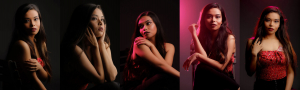
Do look at some of the photographs shot during one of our previous workshops
How to apply ?
Models need to fill up the following form(s) on our website.